Grading That Redirects Water Permanently
Drainage Solutions in Dawsonville for properties where standing water damages foundations, erosion expands annually, or saturated yards prevent outdoor use
Water flowing toward a foundation rather than away from it creates hydrostatic pressure against basement walls and saturates soil that supports footings, leading to settlement cracks and interior moisture problems. Drainage solutions use strategic grading to establish positive slopes that direct runoff into planned collection paths, preventing water from pooling against structures or eroding unprotected soil. Grading & Clearing Services designs grading improvements across Dawsonville properties by analyzing where water currently flows during storms and reshaping terrain to move it toward swales, culverts, or vegetated buffers. The work addresses properties where clay soils hold water at the surface and slopes that concentrate flow into erosion channels.
Operators identify low spots where water collects and high zones that can be cut to create drainage paths, then grade surfaces to achieve slopes between two and five percent—steep enough to move water but gentle enough to prevent erosion. Swales get shaped to carry runoff away from buildings, and berms redirect flow around vulnerable areas. This approach solves drainage problems by changing how water moves across the property rather than trying to remove it after it pools.
Schedule a drainage assessment to map current flow patterns and identify grading adjustments that will redirect water effectively.
Why Grading-Based Solutions Work for Water Issues
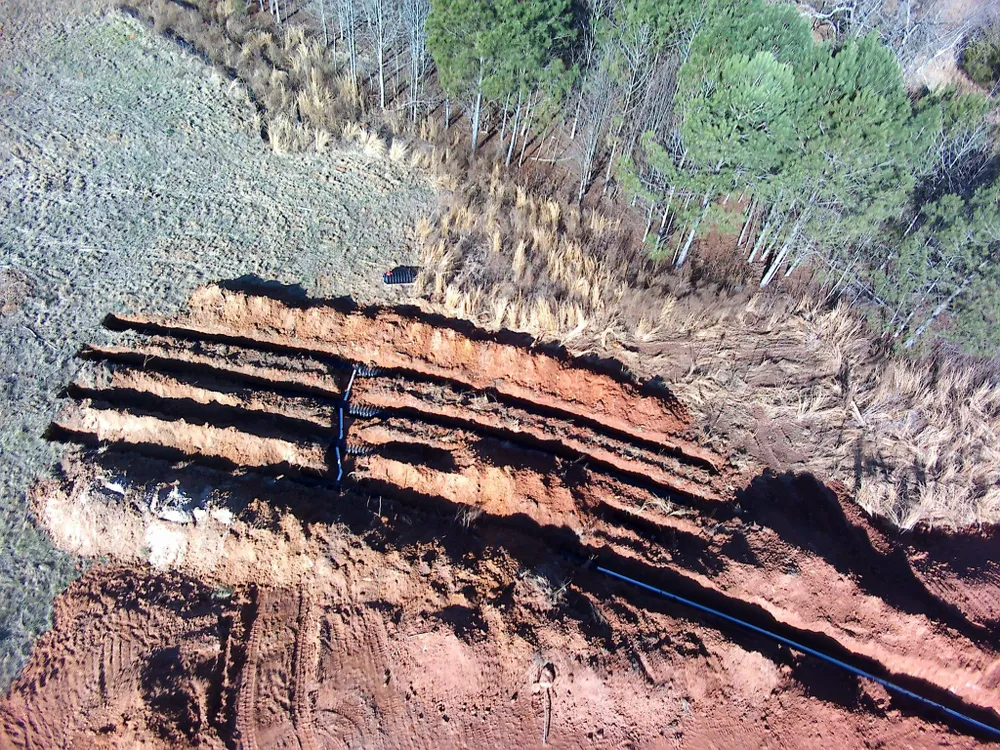
Drainage improvements start with surveying property elevations and observing where water travels during rain events. Grading equipment removes soil from high areas and places it strategically to fill depressions or build berms that guide flow. Finished surfaces show continuous slopes without reverse grades that trap water, and planted swales absorb runoff while allowing overflow to continue moving during heavy storms.
After grading work completes, you see water moving away from the foundation within minutes of rain starting rather than pooling against walls for hours. Yards dry quickly enough for use within a day of storms, and erosion stops expanding because runoff no longer concentrates in uncontrolled channels. Properly graded surfaces stay functional through north Georgia's intense summer thunderstorms because slopes handle peak flow volumes without overtopping or reversing direction.
Solutions include adding catch basins or culverts where grading alone can't move sufficient water, and connecting those systems to outlets that discharge safely off-property. Properties on slopes may need terracing to slow runoff velocity, while flat lots benefit from subtle grading changes that create positive drainage toward planted buffers.
Questions Before Starting Drainage Work
Property owners dealing with water problems want to know what drainage improvements involve and how long results last.
What causes water to pool near foundations?
Negative grading created during original construction, soil settlement over time, or landscape installations that blocked drainage paths all contribute to water moving toward buildings instead of away.
How does grading compare to installing drains?
Grading changes surface flow patterns and works for properties where water arrives as runoff rather than groundwater seepage—subsurface drains handle water that emerges from slopes or high water tables, while grading manages rainfall before it infiltrates.
When is the best time to complete drainage improvements?
Grading work happens most efficiently during dry periods when soil is workable, but observing property drainage during active rain helps identify exactly where adjustments are needed before operators begin reshaping terrain.
What maintenance do graded drainage systems need?
Swales and berms require periodic clearing of accumulated sediment and debris to maintain capacity, and planted areas benefit from vegetation management that keeps roots stabilizing soil without blocking flow.
How do Dawsonville's clay soils affect drainage solutions?
Clay sheds water quickly when slopes are adequate but erodes easily when flow concentrates, so drainage designs include velocity control through gentle grades and vegetated swales that slow runoff while still moving it away from structures.
Grading & Clearing Services tailors drainage improvements to your property's topography and water volume. Request a site visit to review problem areas and outline grading changes that will redirect water permanently.