Building Pads Shaped for Stable Foundations
Site Preparation in Dawsonville for properties requiring grading, drainage correction, or soil stabilization before construction begins
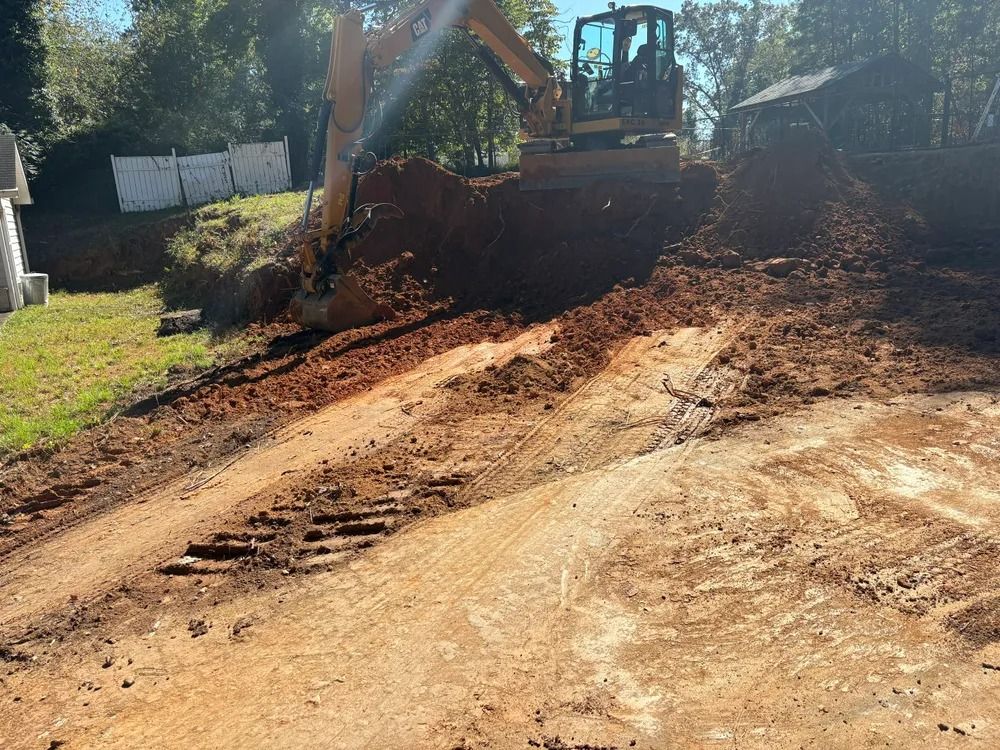
Construction delays multiply when sites are not properly graded before foundation contractors arrive. Grading & Clearing Services clears vegetation, shapes building pads to engineered elevations, and installs drainage features that prevent water accumulation during and after construction. Thorough site preparation in Dawsonville addresses slope stability on hillside parcels, clay soil compaction requirements for load-bearing surfaces, and erosion control during the months between earthwork and final landscaping.
Site preparation includes removing topsoil and stockpiling it for later redistribution, compacting subgrade to support structural loads without settlement, and grading drainage swales that direct runoff away from building footprints. Equipment operators verify elevations using survey benchmarks and adjust soil moisture content when compaction testing identifies areas that do not meet engineering specifications.
Schedule a free estimate for site preparation services tailored to building plans, soil conditions, and drainage requirements specific to your property.
Why Proper Grading Works for Construction Success
Professional site preparation involves more than pushing soil into approximate shapes. Operators follow grading plans that specify finish elevations at multiple points across the building pad, ensuring that slopes drain toward designated collection points rather than pooling against future foundations. Compaction occurs in lifts no thicker than eight inches, with each layer tested before the next is placed, preventing voids that cause differential settlement after homes or buildings are constructed.
Once site preparation is complete, you see level building pads where foundation forms can be set without shimming or correction, drainage paths that remain functional during heavy rain, and soil conditions stable enough to support concrete trucks and material deliveries. Standing water no longer appears after storms, and equipment traffic does not create ruts that require regrading. Construction crews can begin work immediately without waiting for additional earthwork or drainage fixes.
Site preparation complexity varies based on native soil quality, property slope, and whether building plans require imported fill or engineered soil mixes. Some sites need French drains or retention basins to manage runoff volumes that exceed surface grading capacity. Professional equipment allows accurate and efficient work across projects ranging from single-home lots to multi-acre developments where grading must coordinate with utility installation and road construction.
Questions Before Starting Your Project
Property owners in north Georgia preparing sites for construction typically ask about grading accuracy, soil testing, and drainage design before earthwork begins.
What determines whether a site requires imported fill material?
Sites with insufficient native soil, excessive organic content, or steep slopes that cannot be stabilized through regrading alone require engineered fill delivered from off-site borrow pits and compacted in controlled lifts.
How does winter weather in Dawsonville affect site preparation schedules?
Frozen ground prevents proper compaction, and excessive rain turns clay soil into unworkable mud, making late spring through early fall the preferred window for grading projects that require precise compaction testing.
What drainage features are installed during site preparation?
Swales, berms, and subsurface drains are shaped or installed to intercept runoff before it reaches building pads, with outlet points directed toward natural drainage courses or stormwater systems.
How is compaction verified before construction begins?
Geotechnical firms perform nuclear density testing or sand cone tests at intervals specified by engineers, comparing achieved density to required percentages of maximum dry density determined through lab testing.
What site access is needed for grading equipment?
Grading projects require access routes capable of supporting loaded haul trucks, with width sufficient for equipment to maneuver without damaging adjacent vegetation or improvements, typically sixteen to twenty feet depending on truck size.
Grading & Clearing Services prepares properties throughout Dawsonville, Cumming, Gainesville, Canton, and Alpharetta for successful construction using equipment matched to site conditions and engineering specifications. Reach out at (770) 789-4770 to discuss grading plans, drainage needs, and project timelines for your site preparation requirements.