Ground Preparation That Supports System Function
Septic Systems in Dawsonville for rural properties requiring new installations or homes where existing systems no longer meet capacity needs
When county regulations require septic installation for new construction or an aging system reaches the end of its functional life, the excavation and site preparation determine whether the replacement performs reliably for decades. Grading & Clearing Services completes septic system installation in Dawsonville by excavating tanks and drain fields according to engineered specifications, then grading surrounding areas to prevent surface water from entering the system. Properties with clay-heavy soil or sloped terrain require careful attention to placement depth and field orientation.
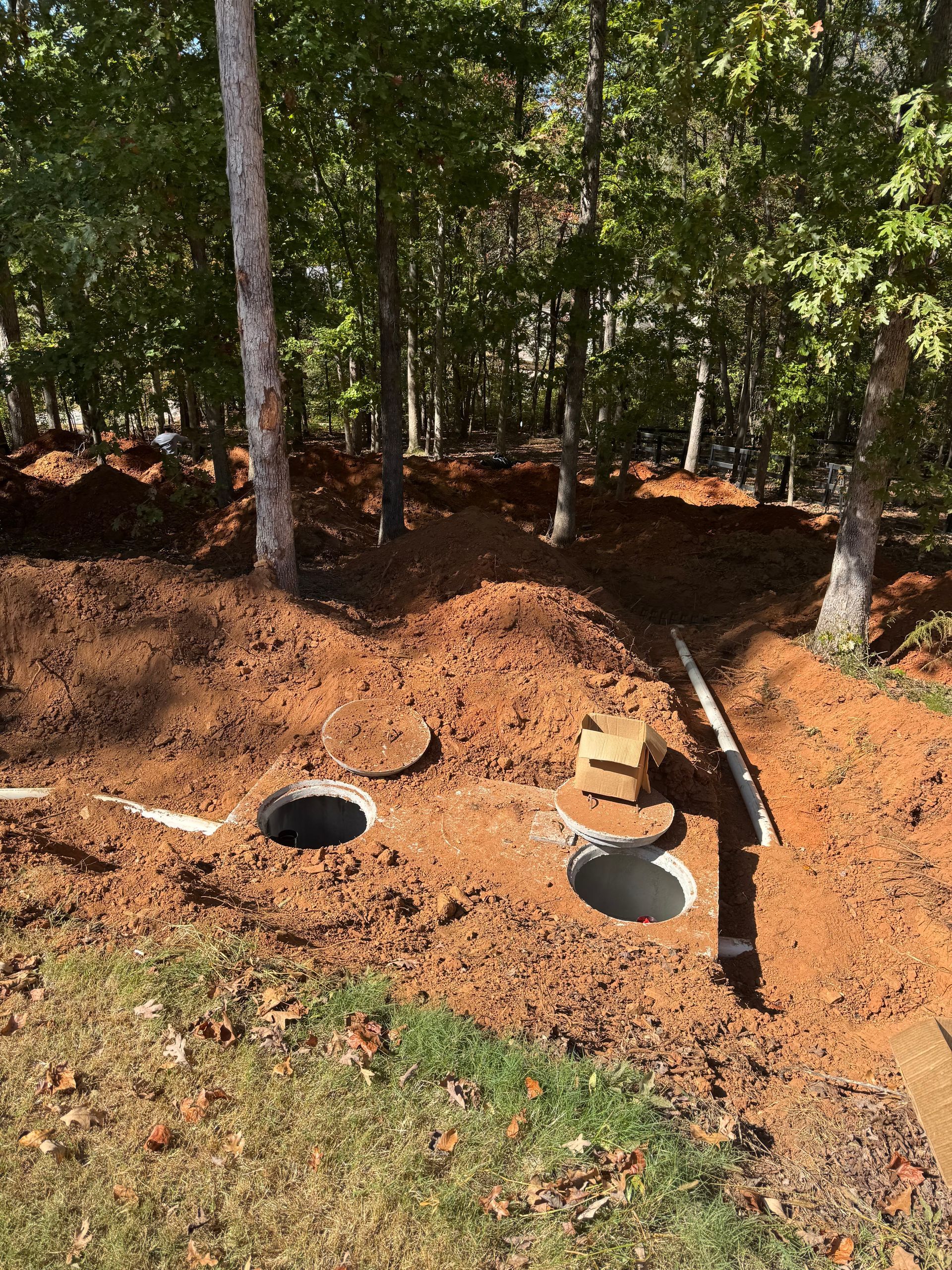
Installation begins with locating the system according to setback requirements from wells, property lines, and structures. Excavation follows soil testing that determines absorption rates and influences drain field size. Each component gets positioned at depths that protect against freezing while maintaining gravity flow from the home, and backfill around tanks is compacted in layers to prevent settling that stresses inlet and outlet connections.
Arrange a consultation to review soil test results and determine system sizing for your household capacity.
How Septic Installation Addresses Site Conditions
Installing a septic system involves more than placing a tank—the process requires grading the drain field area to distribute effluent evenly across absorption trenches. Operators excavate trenches to specified widths and depths, place distribution piping on gravel bedding, and cover lines with additional aggregate before replacing topsoil. Field layout follows contours that prevent effluent from concentrating in low spots where saturation would occur.
Once installation finishes and inspections pass, you see a restored yard surface with minimal grade changes and vegetation that regrows over the field area within weeks. The system processes wastewater without odors or surfacing liquids, and proper installation depth means seasonal freezing doesn't affect tank access or distribution function. Grading & Clearing Services coordinates with inspectors to verify that placement meets county codes before backfilling begins.
The service includes hauling excavated material off-site or spreading it in designated areas on your property. Systems installed on slopes may require additional grading work to create level tank placement zones, and operators adjust field orientation to work with natural drainage patterns rather than against them.
Answers to Frequent Septic Installation Questions
Homeowners preparing for septic installation often want to understand site requirements and how the work affects their property timeline.
What site conditions affect septic system placement?
Soil percolation rates, water table depth, and distance to wells or streams dictate where systems can be located—slow-draining clay requires larger drain fields, while high water tables may need mound systems that raise the field above natural grade.
How does excavation avoid damaging existing utilities?
Utility locating services mark underground lines before digging begins, and operators hand-dig near marked locations to expose lines safely before bringing excavation equipment into those zones.
When can landscaping be restored over the drain field?
Light vegetation can be planted immediately after topsoil replacement, but trees and deep-rooted shrubs must stay outside the field perimeter to prevent roots from infiltrating distribution pipes and causing blockages.
What documentation comes with septic installation?
Installations include as-built drawings showing tank and field locations, inspection approvals, and maintenance guidelines that future service providers use when pumping or troubleshooting the system.
How do Dawsonville soil conditions influence system design?
North Georgia's clay content slows absorption, so engineers often specify larger drain fields or alternative designs like chamber systems that increase soil contact area compared to standard gravel trench installations.
Grading & Clearing Services works from engineered plans to complete installations that meet county health department standards. Request a free estimate that accounts for your property's soil characteristics and system capacity requirements.