
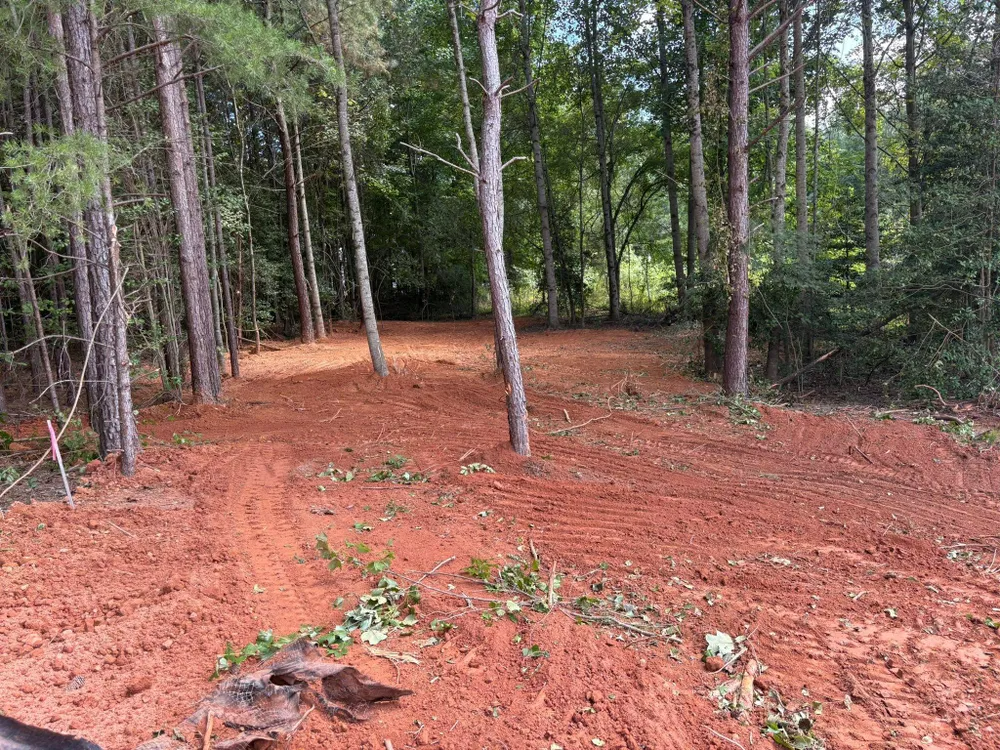
Clearing That Leaves Soil Structure Intact
Forestry Mulching in Dawsonville for overgrown lots, trail access needs, or properties with invasive vegetation reducing usable space
Lots covered in saplings, brambles, and undergrowth become inaccessible for recreational use or future development, and traditional clearing methods that uproot vegetation leave bare soil vulnerable to erosion. Forestry mulching cuts unwanted plants at ground level and grinds them into organic mulch that stays on-site, protecting soil from rain impact while decomposing into nutrients. Grading & Clearing Services operates forestry mulching equipment across residential, commercial, and rural properties in Dawsonville where selective clearing improves access without stripping topsoil or creating debris piles that require hauling.
The process uses a rotating drum with carbide teeth that shreds vegetation into uniform chips, processing everything from small brush to trees up to eight inches in diameter. Operators maneuver the mulcher along planned paths, leaving desirable trees untouched while removing invasive species and dense undergrowth. The resulting mulch layer covers cleared areas with three to four inches of organic material that stabilizes the ground surface and suppresses regrowth temporarily.
Schedule a forestry mulching consultation to identify vegetation removal zones and determine equipment access routes for your property.
What You Notice Once Mulching Is Finished
Forestry mulching opens sightlines and creates navigable ground where thick brush previously blocked movement. The finished surface shows a uniform mulch layer with stumps ground to below-grade level, allowing vehicles or foot traffic to cross without obstruction. Unlike burning or grubbing, mulching leaves no ash, no exposed roots, and no trenches from equipment dragging material off-site.
After mulching work completes, you see defined property boundaries, cleared trails, or building sites ready for additional grading. The mulch layer holds moisture and moderates soil temperature, which helps desirable vegetation establish if you plan landscaping installation. Properties cleared during growing season show reduced regrowth compared to cutting alone, since the mulch blanket limits sunlight reaching seeds and root systems attempting to sprout.
This approach works well for properties where soil conservation matters or where removing material would require extensive truck traffic over finished areas. Mulching doesn't address large trees or stumps that require removal rather than grinding, and operators identify those obstacles during the initial site review so you understand what additional clearing may involve.
Common Questions About Forestry Mulching
Property owners considering mulching want to know how the process compares to other clearing methods and what their land looks like afterward.
What vegetation does mulching equipment handle effectively?
Mulchers process brush, saplings, vines, and trees up to eight inches in diameter—larger trees require felling and separate processing, while herbaceous plants and grasses get incorporated into the mulch layer without issue.
How does mulching affect future land use?
Mulched areas are immediately walkable and can be graded or built on after the mulch settles, though some property owners wait several months for decomposition to begin before installing hardscaping or planting landscaping.
When is mulching preferred over traditional clearing?
Mulching works best on properties where erosion control matters, where hauling debris isn't practical, or where you want to preserve topsoil and avoid the compaction that comes from driving heavy equipment back and forth to remove material.
What determines how long mulch suppresses regrowth?
Mulch depth, climate conditions, and the type of vegetation removed all influence regrowth timing—Dawsonville's warm, wet summers accelerate decomposition, so annual maintenance mulching may be needed on properties where invasive species persist.
How do operators avoid damaging desirable trees during clearing?
Mulcher operators mark trees to preserve before starting work, then approach those areas carefully to avoid striking trunks or roots with the cutting drum while removing surrounding vegetation.
Grading & Clearing Services tailors mulching projects to your land management goals and property access constraints. Request a site evaluation to assess vegetation density and determine equipment requirements.