
Access Roads Built for Load and Weather
Gravel Driveway Installation in Dawsonville for homes, farms, and commercial properties needing durable vehicle access across varied terrain
Driveways that wash out during storms or develop ruts under truck traffic fail because the base wasn't prepared to handle water movement and vehicle weight simultaneously. Proper gravel driveway installation involves excavating soft soil, placing compacted aggregate base layers, and grading surfaces to shed water off the driving lane. Grading & Clearing Services installs gravel driveways across residential, farm, and commercial properties in Dawsonville by building stable bases that resist the rutting and washout common in north Georgia's clay soils during heavy rain. You drive on surfaces that remain firm under load and maintain their crown through seasonal freeze-thaw cycles.
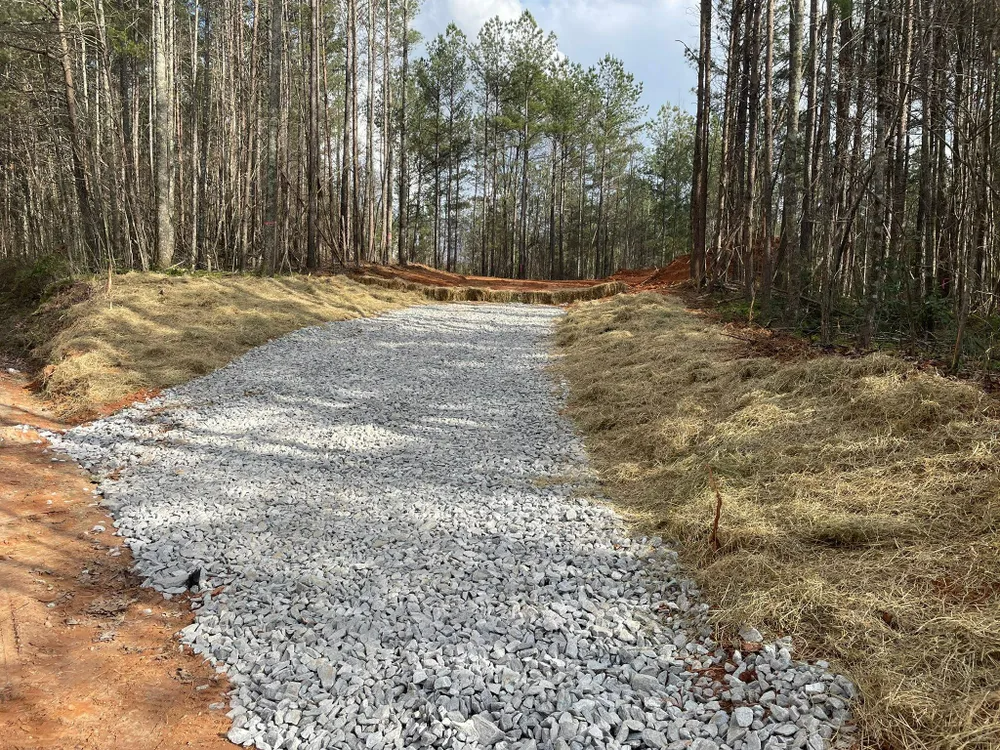
Installation begins with removing topsoil and organic material that compresses unevenly, then placing a crushed stone base that locks together under compaction. Operators grade the base to create a crown that directs water toward ditches or vegetated edges, preventing pooling in the wheel paths. Surface gravel goes down in lifts, with each layer compacted before adding the next to achieve density that supports traffic without displacement.
Request a free quote that details base depth, gravel type, and grading specifications based on your driveway length and traffic patterns.
What Changes After Driveway Installation
A properly installed gravel driveway shows a consistent crown across its length, with surfaces that drain toward edges rather than collecting water in low spots. The compacted base prevents the sinking that occurs when vehicles drive over unimproved soil, and the gravel surface remains firm enough for sedans while accommodating delivery trucks without creating deep ruts. Grading & Clearing Services uses angular crushed stone for base layers because the irregular edges interlock under compaction, unlike rounded river gravel that shifts under wheel loads.
After installation completes, you notice vehicles maintaining traction during wet weather and gravel staying in place rather than scattering into yards or roadways. The driveway holds its shape through storms, with water running off into planned drainage paths instead of channeling down the driving surface. Driveways built on slopes include grade breaks or water bars that interrupt runoff velocity and prevent erosion from concentrating flow.
The work includes shaping ditch lines or swales along driveway edges to capture runoff before it reaches the road. Replacement installations remove failed material before placing new base layers, and operators coordinate gravel delivery to minimize truck traffic over finished areas that could cause premature rutting.
What Homeowners Usually Ask
Homeowners planning driveway projects want to understand material choices and maintenance requirements before installation begins.
What base depth does a residential driveway need?
Most residential driveways require six to eight inches of compacted base aggregate, while farm driveways expecting loaded truck traffic need ten to twelve inches to distribute weight without base failure under the gravel surface.
How does Georgia clay affect driveway stability?
Clay soils retain water and become slippery when saturated, so proper installations include geotextile fabric between native soil and base stone to prevent clay from pumping up into the aggregate and weakening the base structure.
When should fresh gravel be added to maintain the surface?
Driveways benefit from a top-dress layer every two to three years to replace surface gravel that embeds into the base or scatters from traffic, maintaining the crown that keeps water draining properly.
What gravel size works best for driving surfaces?
Surface layers typically use three-quarter-inch angular crushed stone that compacts firmly but still allows individual stones to lock together, while larger base stone provides structural strength beneath.
How do installers prevent washout on sloped driveways?
Slopes receive grade breaks every fifty to seventy-five feet that redirect water off the surface before velocity builds enough to move gravel, and cross-slope grading keeps water moving toward edges rather than down the center.
Grading & Clearing Services builds driveways matched to your property's soil conditions and vehicle use requirements. Arrange an estimate visit to review access routes and determine material quantities for your driveway project.